

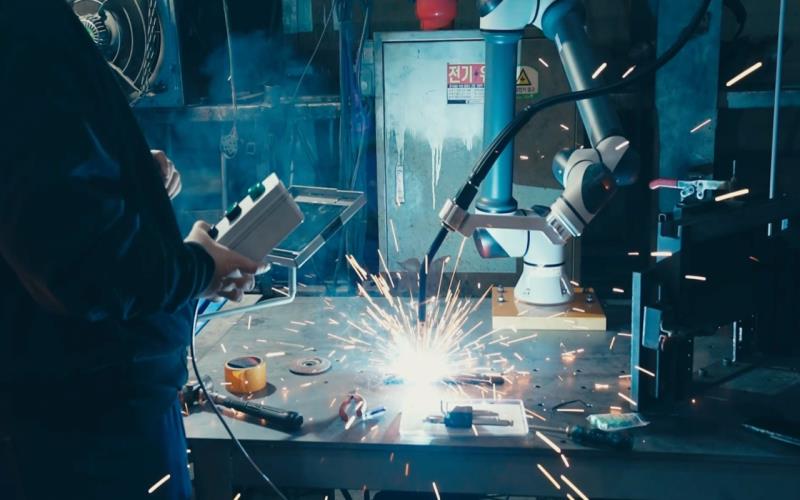
Automation is now essential for accuracy and efficiency in the industrial industry, which is always changing. Cobots, or collaborative robots, are one of the newest developments in this field. They are used in welding procedures. Cobots are revolutionising the welding business by providing a combination of safety, flexibility, and precision that traditional robotic systems find difficult to attain. They are made to operate seamlessly with human operators.
The Genesis of Cobots in Welding
Welding has long been a vital process in manufacturing, essential for joining metal components in industries ranging from automotive to aerospace. However, traditional welding methods often require skilled human operators to perform intricate tasks in hazardous environments. This reliance on manual labour can lead to inefficiencies, safety concerns, and inconsistencies in weld quality.
Enter cobots. These adaptable machines, equipped with advanced sensors and programming, are redefining welding automation. Unlike their larger industrial robot counterparts, cobots are designed to collaborate with human workers in shared workspaces, enhancing productivity while prioritising safety.
The Advantages of Cobots in Welding
One of the most significant advantages of cobot welding is its ability to augment human capabilities rather than replace them entirely. Cobots excel in repetitive and physically demanding tasks, such as holding welding torches in precise positions for extended periods. By offloading these tasks to cobots, human operators can focus on higher-level activities, such as programming, quality control, and process optimization.
Furthermore, cobots are inherently flexible and can adapt to changing production demands with ease. Unlike traditional robotic systems, which often require extensive reprogramming and setup for new tasks, cobots can be quickly reconfigured and redeployed for various welding applications. This versatility not only increases operational agility but also reduces downtime and enhances overall efficiency.
Safety is another paramount benefit of cobot welding. With advanced sensor technology and built-in safety features, cobots can detect the presence of human workers in their vicinity and adjust their movements accordingly to avoid collisions and potential hazards. This capability enables cobots to operate safely alongside human operators without the need for physical barriers or safety cages, fostering a collaborative and ergonomic work environment.
The Future of Welding Automation
As cobot technology continues to evolve, so too will its impact on the welding industry. Future advancements may include enhanced artificial intelligence capabilities, enabling cobots to learn and adapt to new welding challenges autonomously. Integration with Internet of Things (IoT) platforms could also enable real-time monitoring and remote control of cobot welding systems, facilitating predictive maintenance and optimization of welding processes.
Moreover, as cobots become more affordable and accessible to manufacturers of all sizes, the adoption of cobot welding solutions is poised to accelerate. Small and medium-sized enterprises, in particular, stand to benefit from the scalability and cost-effectiveness of cobot technology, allowing them to compete more effectively in an increasingly automated marketplace.
In conclusion, cobot welding represents a paradigm shift in the welding industry, offering a harmonious blend of human expertise and robotic precision. By harnessing the strengths of both humans and machines, cobots are revolutionising welding processes, driving efficiency, safety, and innovation to new heights. As manufacturers embrace this transformative technology, the future of welding automation shines brighter than ever before.
Click the link below to find out more!
